
Princes Primary School, Liverpool
A Placemaking Pioneers project story
Princes Primary School in Liverpool supports over 200 children with complex learning and physical needs. An interdisciplinary team from Ridge is helping bring to life a bold vision: a welcoming “village” designed around pupils and their families.
Click on a chapter to find out more

Scroll on
A sense of belonging�
Rethinking special needs education from the child up

Contents
How we’re bringing the vision to life
Building a village, not a school
01
02
03
04


ridge.co.uk

The need for space
Demand for SEND school places is increasing nationwide. In Liverpool, the number of children and young people under 25 with an Education, Health and Care Plan has more than tripled since 2019. �
Meeting rising demand
Scroll on
Princes School is ranked Outstanding by Ofsted. Recognised for its high aspirations for young pupils with special educational needs and disabilities (SEND), the school empowers every child to thrive through a happy, supportive environment and personalised curriculum.
Yet its main building was never designed to accommodate so many children, with such a complex range of needs. �
Rethinking special needs education from the child up
Over the past seven years, Princes School has grown to support more than 200 children, �operating across four sites throughout the city.
None of them meet the school’s aspirations for its pupils. There isn’t enough outdoor space, and breakout areas have had to be converted into classrooms, making it harder for young people who may struggle to regulate their emotions or to be around others.
“Some of our children are non-verbal and have complex care needs,” says Col Hughes, Headteacher. “Hydrotherapy, sensory areas and soft play are proven to really improve outcomes, �but we just haven’t got all the facilities we need.”�
01
Next chapter

Hydrotherapy uses warm water to ease pain, improve movement and support relaxation – especially helpful for children with physical or sensory challenges.
Col Hughes, Headteacher
“We’ve always built the curriculum around our pupils and their needs. Now we’ve been given a unique opportunity to do that at a whole school level.”


Princes School is finally getting a brand-new building, and Liverpool City Council is investing in this urgently needed project. But Col and his team don’t want to replicate the purpose-built schools they’ve visited: “They do have fantastic facilities, but they still feel very clinical and corporate. We want to create something different that’s about our children and their families.” �
A new vision


Sensory areas are calming, immersive spaces that stimulate or soothe through light, sound and texture, helping children manage emotions and connect with their surroundings.�
Soft play encourages safe physical activity, social interaction and confidence – building through movement and exploration.

Soft play
Sensory areas
Hydrotherapy

01
Rethinking special needs education from the child up
02
Building a village, not a school
03
How we're bringing the vision to life

Content
04
A sense of belonging
01
Rethinking special needs education from the child up
02
Building a village, not a school
03
How we're bringing the vision to life
Find out more
Back to menu

04
A sense of belonging
X
Having a child with severe learning and physical difficulties can be isolating.
Princes School wants to give children and their families everything they need in one place – the kind of support and opportunities often taken for granted in mainstream education. It’s about being part of a community, having access to different spaces and a wide range of activities that help every child thrive.
Building a village, not a school�
Scroll on
02
Next chapter
Previous chapter
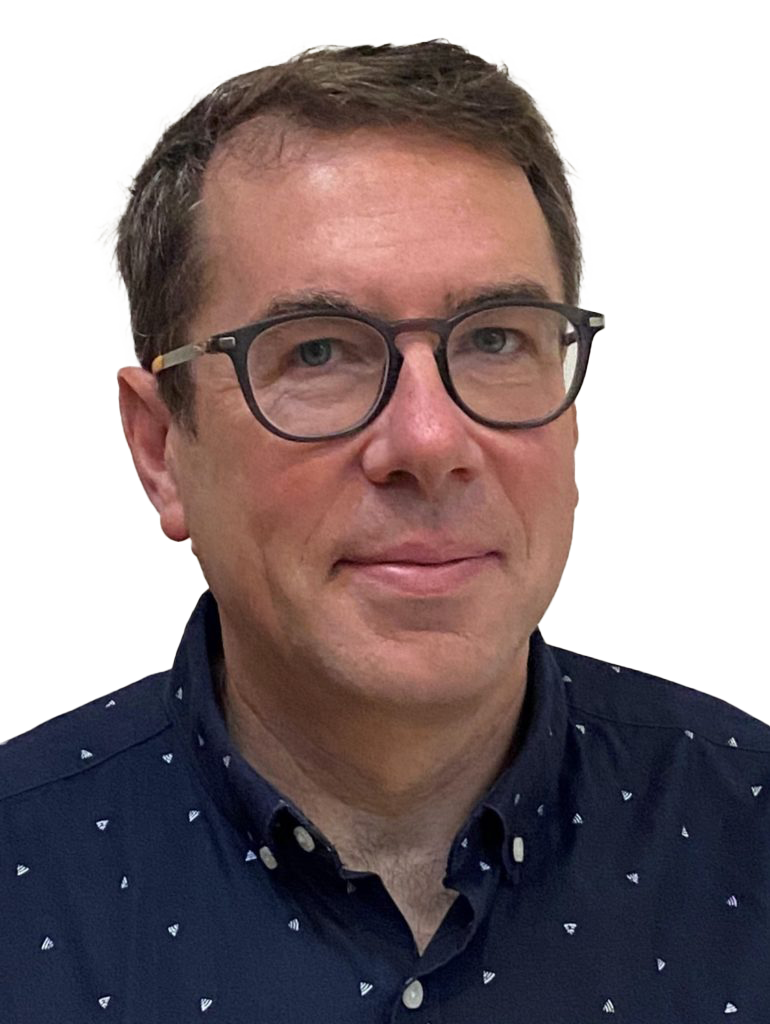
Pete Hawkins, Chair of Governors
It can be challenging to take our children out into the wider community. So we’re going to bring the community into the school.”�
Building bridges
As a village, connection is at the school’s heart. There will be lots of opportunities for pupils to engage with the wider community – from buddy programmes with mainstream schools, to welcoming visitors from local care homes. �
A social hub
SEND schools often draw their pupils from a wider catchment area. This can mean they’re less integrated into the local community than mainstream pupils would be. Princes School will open up its facilities to the public at weekends, evenings and holidays – a big boost for a part of Liverpool that has very few amenities.��
Open to everyone
The local community will have access to these facilities at Princes School:

Col Hughes, Headteacher
I’ve always wanted to feel like we’re at the centre of a community, because that’s often missing as a special school. Now we’re becoming the centre of a much wider community than just ourselves, and that’s really exciting.”�

Café
Hydrotherapy pool
Soft play
areas
Assembly hall
Conference room
A home for life
For children with SEND and their families, school may be the only constant. Col and Pete don’t want their pupils’ relationship with Princes School to end when they reach secondary �age – there will be clubs for older children, and opportunities to remain involved and keep learning throughout their lives. ��


Find out more
A new community
They say it takes a village to raise a child, but for our
families, their village is getting smaller.
Their children may not be able to do the same activities as children at mainstream schools, and they don’t have the same opportunities to socialise. We want to create a place where they feel they belong.”
Pete Hawkins, Chair of Governors

Back to menu

X
01
Rethinking special needs education from the child up
01
Rethinking special needs education from the child up
02
Building a village, not a school
02
Building a village, not a school
03
How we're bringing the vision to life
03
How we're bringing the vision to life
04
A sense of belonging
04
A sense of belonging
Find out more
Content
X
Scroll on
How we’re bringing the vision to life
An interdisciplinary team from Ridge shaped the design �and prepared it for planning.
Our challenge was to bring the school’s unique vision to life, while targeting best practice guidance from the Department �for Education (DfE). This meant designing an inspiring and inclusive environment making the most of every inch – �and every pound.
We designed a single-storey “finger block” with four classroom wings and breakout spaces off a central core. Therapy spaces at the front of the building are available out-of-school hours and open to the community, along with a café and accessible play area.
Our approach
The school’s “village” vision was brought to life through a pioneering fingerblock design that gives every classroom direct outdoor access. The layout follows DfE best practice guidance while maximising space, budget and accessibility.
03


8 multisensory rooms
102, 720 sq ft of outdoor space
2 hydrotherapy pools
31 accessible classrooms
250 pupil capacity
63,000 SQ ft school
At a glance...
Alice Parker, Partner and Education Architecture Lead, Ridge
As soon as they said the word ‘village’, my mindset as a designer changed. It wasn’t just destinations at the end of a street, it was about extending an open arm to the community.”

One team, every skill
What’s special about Princes School?
Outdoor access for every child
A single-storey building was essential, because outdoor play and sensory experiences are fundamental to how children at Princes learn. Our finger block design gives direct and easy playground access from each wing.
DfE guidelines favour two-storey buildings for cost-efficiency, but the savings didn't justify the extra staircases, lifts and fire safety measures. Single-storey proved to be more inclusive.�
Accessibility built in
Accessibility is central to the design. The building features wide corridors and doorways and specialist equipment such as hoists and wheelchair-compatible play equipment. There are personal care and calm spaces in every classroom. There's also a dedicated wing for children with PMLD (Profound and Multiple Learning Disabilities).�
No space wasted
All of the spaces are timetabled – from the classrooms, hydrotherapy pools and play areas, to a forest school, conference room and café.
"Community space isn’t a DfE requirement, so we had to be inventive and work hard to create areas that could be shared, without increasing the overall floor area,” says Alice Parker, Education Architecture Lead at Ridge. ��
Learning through nature
The forest school will be an outdoor classroom for play and exploration, where children can develop confidence, concentration and social skills through activities such as den-building and nature crafts.�
Keeping the traffic moving
About a third of the site is dedicated to parking and drop-off space, because SEND schools need significantly more staff per child – up to 40 minibuses arrive at Princes every morning. Our transport planning team carefully designed circulation routes to protect surrounding roads from any impact.
Our transport simulation shows the afternoon pick-up in action:���

Col Hughes, Headteacher
The relationships we’ve developed with Ridge are fantastic. We felt so listened to, and comfortable to be able to voice anything. I really believe that’s been crucial to getting to where we are now.”�


Find out more
Practical, useable, affordable

The building has a flat roof and is built mainly from brick, which is robust and low maintenance. “The architecture is quite a simple solution, it’s not extravagant,” says Alice. “It really is about what’s going on inside the building, and it’s all designed around the pupils.” �
Find out more
Nature inside and out

Our design features two internal courtyards in the school’s central core, called oases, which will be planted to bring nature deep into the building. These peaceful spaces will serve as areas for reflection and remembrance. “You’ll have the feeling of being outside even when you’re inside, and you’ll be able to see nature as you move along the big internal streets to get to your classroom,” says Alice.

What's in a layout?
We explored several design layouts, from long linear buildings to courtyard configurations. The finger block design – featuring wings or “fingers” extending from a central spine – was the perfect solution. It achieved the school's core vision: giving every child direct access to outdoor space from their classroom.��
Click a tab to find out more about our services
Architecture
We kept tight control of programme, costs and scope. A value management framework delivered £3 million in savings while making sure the design met SEND needs, DfE standards and funding constraints. Working side by side with the client, we shaped a functional, value-for-money design, leading to a successful planning submission.
Project management
Early involvement helped the client compare 200 and 250-place options. We pulled M&E insight, SEND requirements and supply chain feedback into one straightforward cost plan. Alongside managing the budget, we suggested value alternatives and prepared the procurement strategy and first-stage tender package. �
Cost management
Our design for RIBA Stages 2–3+ aims for Net Zero Carbon in Operation, using airsource heat pumps, solar PV and natural ventilation with heat recovery. We kept the systems simple, efficient and suited to the everyday needs of an SEND school.
Building services engineering
We optimised the foundation design by adopting a groundbearing slab supported by a granular capping layer, reducing the need for strip footings and delivering significant cost savings. We also handled the flood risk work, earthworks and SuDS design – including permeable paving and rain gardens – and set site levels and access routes that keep movement across the school simple, inclusive and SEND friendly.�
Civil and structural engineering
Our work with Liverpool City Council helped highlight the unique needs of SEND education. We carried out site analysis, policy checks and community engagement, and resolved complex taxi and minibus drop-off arrangements before submitting the planning application.
Planning
Travel patterns at the existing school shaped our forecasts for the new one. We ran junction assessments and microsimulation modelling to address concerns over parent and taxi traffic, and explored opportunities for more sustainable travel.
Transport planning
CDM workshops brought teams together to tackle key risks early – from brownfield conditions and environmental issues to asbestos, lifting operations and temporary works. For each risk, we prepared a clear, practical mitigation plan.
Health and safety
As BREEAM assessor and advisor, we set the project’s sustainability strategy, targeting a ‘Very Good’ rating. We focused on energy, water, materials and biodiversity, choosing measures that add real value without stretching the budget. �
Sustainability


We carried out a full ground condition assessment using boreholes, trial pits and soakaway testing. We analysed soil samples for geotechnical and contamination risks, giving the design team clear recommendations for foundations, earthworks, remediation and waste.
Geo-environmental consultancy


Architecture
Geo-environmental consultancy
Sustainability
Health
and safety
Transport planning

Planning
Civil and structural engineering
Building services engineering
Cost management
Project management
Back to menu


Planning
Transport planning
Sustainability
Project management
Health
and safety
Geo-environmental consultancy
Cost management
Civil and structural engineering
Building services engineering
Architecture
Next chapter
Previous chapter
01
Rethinking special needs education from the child up
01
Rethinking special needs education from the child up
02
Building a village, not a school
02
Building a village, not a school
03
How we're bringing the vision to life
03
How we're bringing the vision to life
04
A sense of belonging
04
A sense of belonging
Find out more
Content
X
Scroll on
A sense of belonging
04
The school will give children the chance to adventure, find what makes them happy and develop a sense of belonging and purpose. Throughout the design, we’ve added thoughtful touches that bring extra value – without increasing space or cost.

Previous chapter

Menu
Everyone who’s part of the Princes School community will be encouraged to find their social signature – the mark we leave on others, our community and the world around us.
�“It’s a scribble that we leave behind at the end of our lives” explains Pete. “It’s how the world will remember us.” ��
What’s your social signature?
Alice Parker, Education Architecture Lead, Ridge
We are constantly thinking about how to give back to the pupils and offer them additional learning opportunities. That’s our social signature as designers.”
24 ways to change the world
Princes School’s new curriculum will be structured around 24 different ways that a young person can make the world a better place.
“We’ve broken them down into prerequisite skills, from the very first steps, even for our most complex children,” says Col. “We won’t know what the children can do if we don’t present those opportunities. They surprise us all the time.”
Standing in the school’s internal courtyard, the CommuniTREE symbolises every child’s unique journey. Like the seasons, children with severe learning difficulties grow at their own pace – flourishing, pausing briefly and blooming. Princes celebrates these moments, focusing on connection, meaning and the belief that every child can bear fruit at their pace, in their own way.�
The CommuniTREE
Ridge is helping the school develop “super graphics” to bring the village to life. It will have its own Post Office and sweet shop, and a whole cast of friendly faces. “Most schools are like castles,” says Pete. “The kids go in, and the drawbridge comes down until 3pm. Our school will be more like a character. Its heartbeat will be in the café and the village square, and its arms are open wide encouraging people to come in.”��
A character, not a castle
Pete Hawkins, Chair of Governors
For our pupils, it's not the marks they get in life that will count. It's the marks they leave.”��
The mark we leave behind
�Me
Using our strengths to make the world a better place.
We
How we build relationships with others.
Them
Understanding the needs of our community.
Us
Combining all of these things to create something bigger than ourselves.

Find out more about our interdisciplinary approach at Ridge.
Find out more
Princes SEN School CTA here
Read more


Back to menu

01
Rethinking special needs education from the child up
01
Rethinking special needs education from the child up
02
Building a village, not a school
02
Building a village, not a school
03
How we're bringing the vision to life
03
How we're bringing the vision to life
04
A sense of belonging
04
A sense of belonging
Find out more
Content
X